Canadian Finance Educator

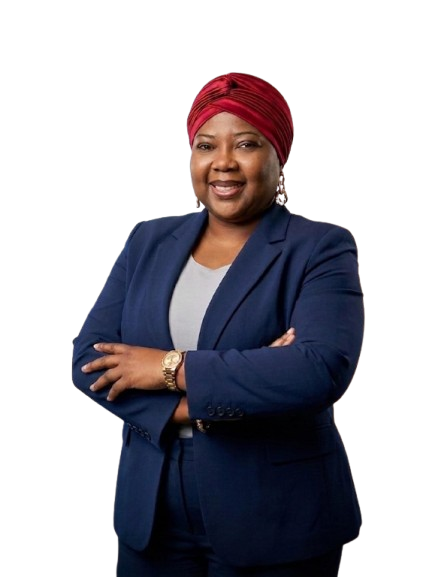
Sukrah Mebude

Your money, understood.

I help Canadians and newcomers take real control of their finances with honest conversations, clear guidance, and plans that actually fit their lives.

Sukrah Mebude
Free Discovery Call No pressure. Just a real conversation.
80+
Families Supported
4
Free Practical Guides
100%
Client-Focused
Free
Discovery Session

Real families. Real results.

Hear from people who took the first step and never looked back.

★★★★★

"I had no idea how banking worked when I arrived in Canada. Sukrah walked me through everything step by step. I now have a TFSA, a budget that works, and a credit score I am proud of."

A
Adaeze K.
Home Support Worker, Ontario
★★★★★

"What I appreciated most was how patient and clear everything was. No rushing, no confusing terms. Just straight answers to my questions. My whole family has benefited from what I learned."

R
Roshan P.
Transit Operator, Greater Toronto Area
★★★★★

"I was overwhelmed with debt and did not know where to turn. After one session I had a clear plan. Six months later I paid off two credit cards and I am saving for the first time."

C
Chiamaka O.
Early Childhood Educator, Brampton

I am in your corner.

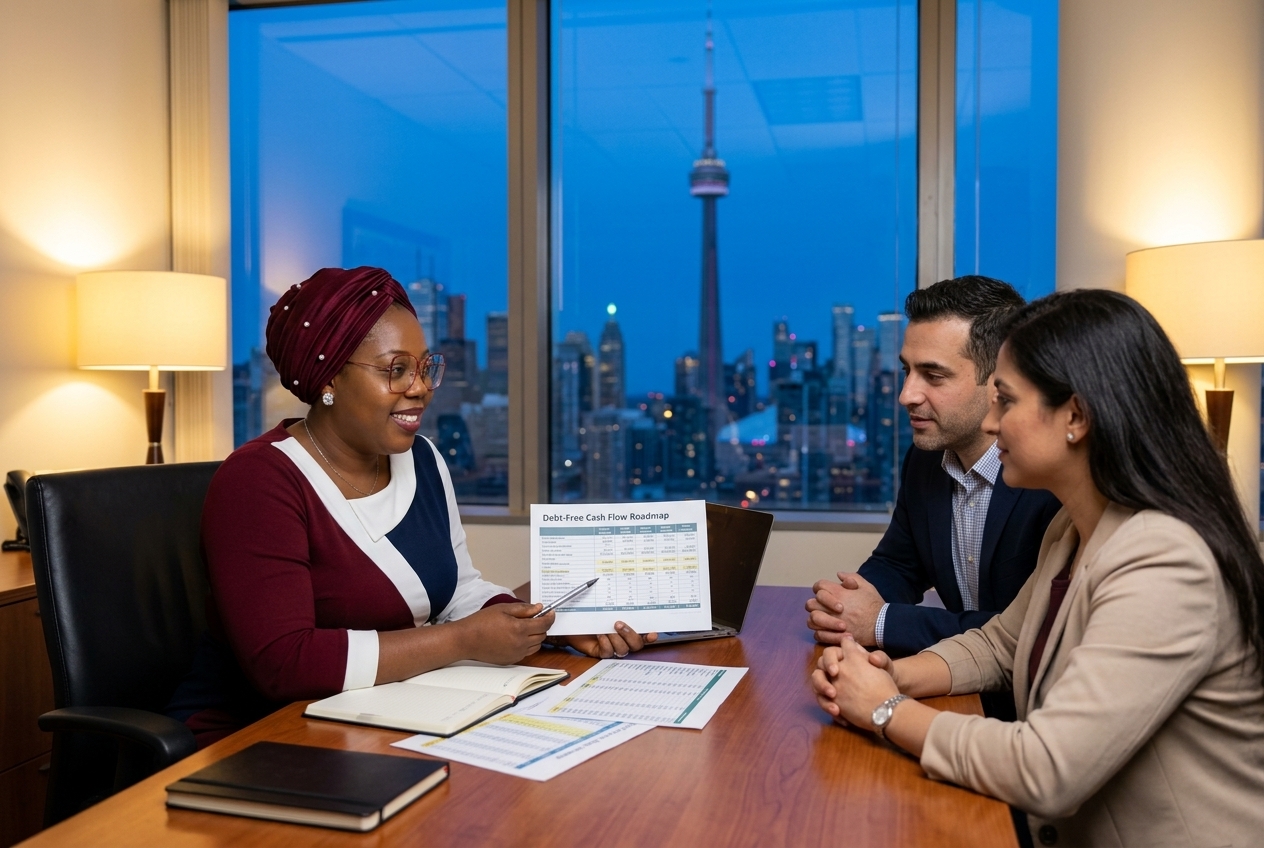
Money can feel overwhelming, especially when you are new to Canada or starting fresh. I am Sukrah Mebude, and I work with Phummie Mebson Financial Services Inc. to make sure you never have to figure it out alone.

I speak your language, meet you where you are, and walk with you every step of the way. Whether you are opening your first account, tackling debt, or planning for the future, I bring clarity and a plan you can actually follow.

Plain Language, Always
Money topics explained in everyday words, at a pace that works for you.
Canada-Specific Guidance
RRSP, TFSA, FHSA, and the Canadian tax system built into every conversation.
Practical Next Steps
Every session ends with something real you can do this week, not someday.
Sukrah Mebude

How I can help you.

Every service is built around where you are right now, not a one-size-fits-all script.

🤝

One-on-One Coaching

Personal sessions built around your goals, your timeline, and your life. We talk through your full financial picture and build a path forward together.

Get started →
🇨🇦

Newcomer Bootcamp

A welcoming, step-by-step introduction to the Canadian financial system. From opening your first account to understanding credit and benefits.

Get started →
💸

Cash Flow & Debt Strategy

We look at where your money is going, find room to breathe, and build a structured plan to reduce what you owe while keeping your life intact.

Get started →
📈

Savings & Asset Growth

From your first savings account to building real wealth over time, we explore the accounts, strategies, and habits that help your money grow and work harder for you.

Get started →
🏠

Retirement & Business Planning

Whether you are a business owner, an employee, or somewhere in between, we map out what your future looks like and what steps to take now to get there on your terms.

Get started →
🛡️

Protection & Estate Planning

You have worked hard to build what you have. We talk through how to protect it, what proper coverage looks like, and how to make sure the people you care about are taken care of.

Get started →

Take something with you.

Written in plain, everyday language. No fluff, no fine print. Just practical guides you can start using today.

01
Your First 90 Days in the Canadian Financial System

Banking, credit, and the essential building blocks, from the moment you arrive.

Download ↓
02
RRSP vs TFSA: Which Account Is Right for You?

A clear breakdown of Canada's two most important savings accounts and how to choose.

Download ↓
03
The Debt-Free Roadmap for Canadian Families

Get out of debt without giving up your life. A step-by-step family-friendly strategy.

Download ↓
04
Building Credit in Canada: The Newcomer's Playbook

From zero credit history to a strong score. Everything you need to know and do.

Download ↓

How well do you know your money?

10 questions drawn from 100+ covering Canadian personal finance. See how you do, then learn what you missed.

💰

Ready to test yourself?

10 randomly chosen questions on Canadian personal finance. Takes about 5 minutes.

0/10
Your score
📅 Book a Session 📚 Download a Guide

You have questions.
Good ones.

Everything people ask before working with me, organized so you can find what matters to you.

🇨🇦

Getting Started in Canada

What should I do with money when I first arrive in Canada?
+
Start by opening a Canadian bank account as soon as you have your Social Insurance Number (SIN). Look for newcomer banking packages offered by the major banks as many waive fees for the first year. Then focus on building a small emergency fund before anything else. Even $500 to $1,000 set aside gives you a safety net while you find your footing.
What type of bank account should a newcomer open first?
+
Start with a chequing account for day-to-day spending and a savings account for your emergency fund. Once you have those in place and your SIN is confirmed, you can open a TFSA to start growing your savings tax-free. Most major banks offer dedicated newcomer packages that bundle these accounts together with reduced fees.
Do I need a Social Insurance Number (SIN) to open a bank account?
+
No. You can open a basic bank account without a SIN using your passport and proof of Canadian address. However, you will need a SIN to open registered accounts like a TFSA or RRSP, to work legally in Canada, and to file taxes. Apply for your SIN at a Service Canada office as soon as possible after arrival.
Which Canadian banks have programs for newcomers?
+
All of Canada's major banks including TD, RBC, Scotiabank, BMO, and CIBC offer newcomer banking packages. Scotiabank's StartRight program, for example, waives monthly fees for one year. Credit unions in your community can also be a great, often more personalized, option. It's worth comparing two or three before you commit.
What documents do I need to open a bank account?
+
Most banks require two pieces of identification. Your passport is one, and your permanent resident card, work permit, or study permit can serve as the second. Some may also ask for proof of a Canadian address such as a utility bill or lease agreement. Call ahead to confirm exactly what your chosen bank requires.
Can I receive government benefits as a newcomer?
+
It depends on the benefit and your immigration status. Permanent residents generally qualify for Canada Child Benefit (CCB) and the GST/HST credit once they file a tax return. Some benefits have residency waiting periods. The fastest way to access what you are entitled to is to file your tax return for every year you lived in Canada, even if you had little or no income.
💳

Savings and Investment Accounts

What is a TFSA and how does it work?
+
A Tax-Free Savings Account (TFSA) lets you save and invest money without paying tax on the growth or withdrawals. You contribute after-tax dollars, and everything earned inside the account, whether interest, dividends, or capital gains, is completely tax-free. The 2024 annual contribution limit is $7,000. Any room you do not use carries forward to future years.
What is an RRSP and who should use one?
+
A Registered Retirement Savings Plan (RRSP) lets you save for retirement with a tax deduction on your contributions. You contribute pre-tax dollars, your money grows tax-sheltered, and you pay tax when you withdraw in retirement, ideally at a lower tax rate. The 2024 contribution limit is 18% of your previous year's earned income, up to a maximum of $31,560. It is most beneficial for people in middle-to-higher income brackets.
What is an FHSA and do I qualify?
+
The First Home Savings Account (FHSA) launched in April 2023 and is designed to help first-time buyers save for a home purchase. You can contribute up to $8,000 per year and up to $40,000 in total. Contributions are tax-deductible and qualifying withdrawals for a first home purchase are completely tax-free. You must be a Canadian resident, at least 18 years old, and a first-time home buyer.
Can I have both a TFSA and an RRSP?
+
Yes, absolutely. You can hold both at the same time and contribute to both in the same year, within your respective contribution limits. Many Canadians use both accounts strategically, using the TFSA for shorter-term goals and emergency savings while using the RRSP for retirement. The right balance depends on your income level and goals.
What happens to my TFSA contribution room if I leave Canada?
+
You stop accumulating new TFSA room the year you become a non-resident. However, your existing TFSA account stays open and continues to grow tax-free inside Canada. If you contribute while a non-resident, you will be charged a 1% monthly penalty on those contributions. When you return and become a resident again, your room starts accumulating once more.
What can I invest in inside a TFSA or RRSP?
+
Both the TFSA and RRSP can hold a wide range of investments including cash savings, GICs (Guaranteed Investment Certificates), stocks, bonds, mutual funds, and ETFs. They are not just savings accounts. The type of investment you choose inside the account depends on your risk tolerance, timeline, and financial goals.
What happens to my RRSP when I turn 71?
+
By December 31 of the year you turn 71, you must convert your RRSP into a Registered Retirement Income Fund (RRIF) or use the funds to purchase an annuity. You can no longer contribute to an RRSP after this point. From a RRIF, you are required to withdraw a minimum amount each year, which counts as taxable income.
Can I withdraw from my RRSP early?
+
Yes, you can withdraw from your RRSP at any time, but the amount will be added to your income for that year and taxed accordingly. There are two exceptions: the Home Buyers' Plan (HBP) allows you to withdraw up to $35,000 tax-free to buy a qualifying first home, and the Lifelong Learning Plan (LLP) allows withdrawals for eligible education. Both must be repaid over time.
💵

Credit and Banking

How do I start building credit with no Canadian credit history?
+
The most reliable starting point is a secured credit card. You put a deposit with the bank, typically $200 to $500, and that becomes your credit limit. Use it for small regular purchases, pay the full balance every month, and your credit score will begin to build. Many major banks offer these specifically for newcomers. Some even offer unsecured credit cards through newcomer programs without requiring Canadian credit history.
What is a good credit score in Canada?
+
Credit scores in Canada range from 300 to 900. A score of 660 or above is generally considered good and will qualify you for most standard lending products. A score above 725 is very good, and above 760 is considered excellent and gives you access to the best rates. Building from scratch typically takes 6 to 12 months of consistent, responsible credit use.
Does applying for credit hurt my score?
+
Yes, but only slightly and temporarily. Each time a lender does a "hard pull" to check your credit, your score may dip by a few points. This is normal. Applying for multiple products in a short period can have a bigger impact. Checking your own credit score, which is a "soft pull," has no impact on your score at all. You can and should check your own credit regularly.
What is the difference between Equifax and TransUnion?
+
Both Equifax and TransUnion are credit bureaus that collect and maintain your credit information in Canada. Lenders may report to one or both, and the scores each bureau generates can differ slightly. It is a good idea to check your report with both. You can request a free copy of your credit report from each bureau once per year through their respective websites.
What factors affect my credit score the most?
+
The most important factor is your payment history, meaning whether you pay on time every month. This accounts for roughly 35% of your score. The second biggest factor is your credit utilization, which is how much of your available credit you are using. Keeping this below 30% of your limit is generally recommended. Other factors include the length of your credit history, the types of credit you have, and how recently you applied for new credit.
Can I use my credit history from another country in Canada?
+
Generally, no. Canadian credit bureaus do not receive credit history from other countries. This means you effectively start from scratch when you arrive in Canada. Some banks have newcomer programs that take international credit history into consideration informally when opening accounts, but your Canadian credit score itself will start at zero and must be built from the ground up.
📊

Debt Management

What is the best way to pay off multiple debts?
+
There are two popular approaches. The avalanche method prioritizes the debt with the highest interest rate first, which saves the most money overall. The snowball method focuses on the smallest balance first, which builds momentum and motivation through quick wins. Both work. The best one is the one you will actually stick with. We can figure out together which fits your personality and situation best.
Should I pay off debt or invest first?
+
It depends on the interest rate of your debt. If you carry high-interest debt such as a credit card at 20% or more, paying that down first almost always makes more mathematical sense than investing. If your debt carries a low interest rate such as a student loan at 5%, investing while making regular debt payments can work well simultaneously. This is one of the most common questions I help people work through in a session.
What is a debt consolidation loan?
+
A debt consolidation loan combines multiple debts into a single loan, ideally at a lower interest rate. Instead of tracking and paying four or five creditors, you make one monthly payment. This can simplify your finances and reduce your total interest cost. However, it requires qualifying for a new loan and having the discipline not to run up new debt after consolidating.
What is a consumer proposal and how does it work?
+
A consumer proposal is a legal process administered by a Licensed Insolvency Trustee (LIT) where you offer to repay a portion of your unsecured debts over a period of up to five years. If creditors accept it, the remaining debt is forgiven. It stays on your credit report for three years after completion and is considered a serious step, but it is often a better option than bankruptcy for people with significant debt they cannot manage.
Is a line of credit the same as a credit card?
+
No, though they work similarly. A line of credit is a flexible loan with a set limit that you can borrow from as needed and repay over time. Interest is charged only on what you use. Lines of credit typically carry much lower interest rates than credit cards, sometimes as low as prime plus 1 or 2 percent. Credit cards offer convenience and rewards but come with much higher interest rates, which is why carrying a balance on a credit card is so costly.
📋

Taxes and Government Benefits

When is the Canadian tax filing deadline?
+
For most Canadians, the tax return deadline is April 30 each year. If you or your spouse are self-employed, the filing deadline extends to June 15, but any taxes owed are still due by April 30. Filing late when you owe money results in interest and penalties. Filing late when you are owed a refund just delays getting your money back.
What is the GST/HST credit?
+
The GST/HST credit is a tax-free quarterly payment from the federal government that helps individuals and families with low to moderate incomes offset the goods and services tax they pay. The amount you receive depends on your family size and net income. You are automatically considered for this benefit when you file your tax return. No separate application is needed.
What is the Canada Child Benefit (CCB)?
+
The Canada Child Benefit is a monthly tax-free payment for families raising children under 18. The amount is based on your family's net income and the ages of your children. To receive it, both parents or the primary caregiver must file a tax return every year, even if they had no income. You apply through your CRA My Account or by submitting RC66, Schedule RC66SCH, and proof of your child's birth.
Should I file a tax return even if I had no income?
+
Yes. Filing a return even with zero income establishes your TFSA contribution room, qualifies you for the GST/HST credit, helps you access the Canada Child Benefit, and builds RRSP contribution room based on any eligible income. Many government benefits are calculated using the previous year's tax return, so skipping a year can cause you to miss out on payments you are entitled to.
What is a Notice of Assessment (NOA)?
+
A Notice of Assessment is the document the Canada Revenue Agency (CRA) sends after processing your tax return. It confirms whether you owe money, are getting a refund, or have a zero balance. It also shows your available RRSP contribution room for the next year. You can access your NOA through CRA My Account online. Keep it on file as lenders often ask for it when you apply for mortgages or loans.
What is Canada Pension Plan (CPP) and when do I get it?
+
CPP is a monthly retirement benefit funded by contributions you make during your working years. The standard age to begin collecting is 65, but you can start as early as 60 (with a reduced amount) or as late as 70 (with an increased amount). The more you have worked and contributed in Canada, the higher your eventual CPP payment. Newcomers who contributed to a pension in another country may be able to access international social security agreements that Canada has with certain countries.
🤝

Working with Sukrah

What exactly is a finance educator?
+
A finance educator focuses on teaching you how money works, how the Canadian financial system is structured, and how to make informed decisions that fit your life. I help you understand your options, build your knowledge, and develop practical skills. I do not sell financial products, manage investments on your behalf, or provide regulated financial planning advice. What I do is help you understand your situation clearly so you can make your own confident choices.
Are your sessions really free? Is there any charge?
+
Yes, all sessions are completely free. There is no charge, no hidden fee, and no obligation. Every conversation is simply about helping you understand your money better. Come with your questions, leave with clarity and at least one step you can take right away.
Are sessions virtual or in person?
+
Sessions are available both virtually and in person. Virtual sessions are open to anyone across North America, including Canada and the United States, so getting started is easy no matter where you are. In-person availability varies by location, so feel free to ask when you reach out.
What should I bring or prepare for my first session?
+
Nothing specific is required for the first call. Just come with your questions and a general sense of what is weighing on you financially. For follow-up sessions, it helps to have a rough picture of your monthly income and expenses, any debts you carry, and any accounts you currently have. We will build from there together.
Can I bring my partner or spouse to a session?
+
Absolutely, and I encourage it. Many financial decisions affect the whole household, and it is much easier to move forward together when both people understand the plan. Couples often find that having an outside perspective in the room helps open conversations they have been putting off.
How long is a typical session?
+
The free discovery call is 30 minutes. Standard coaching sessions run 60 to 90 minutes, depending on your goals and what we are working through. Some people find they need only one or two focused sessions. Others prefer ongoing support as they work through a bigger plan. We figure out what works best for you.
Do you work with people outside of Canada?
+
Yes. Sessions are available to clients across North America, including both Canada and the United States. Whether you are in Toronto, Calgary, New York, or anywhere in between, you can connect virtually at a time that works for you. If you are in the US and want to understand the Canadian financial system, whether because you are planning a move, have family here, or simply want to learn, you are very welcome to reach out.

Let's talk about your money.

Book a free 30-minute discovery call. No pressure, no pitch. Just an honest conversation about where you are and where you want to go.

Phone
(289) 244-3466
Website
phummiemebsonFSinc.ca
Company
Phummie Mebson Financial Services Inc.

Your information is private and will never be shared. I typically respond within one business day.